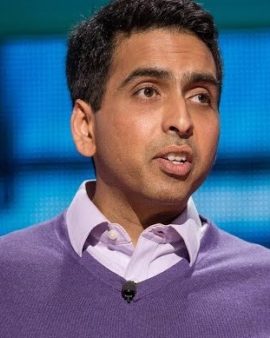
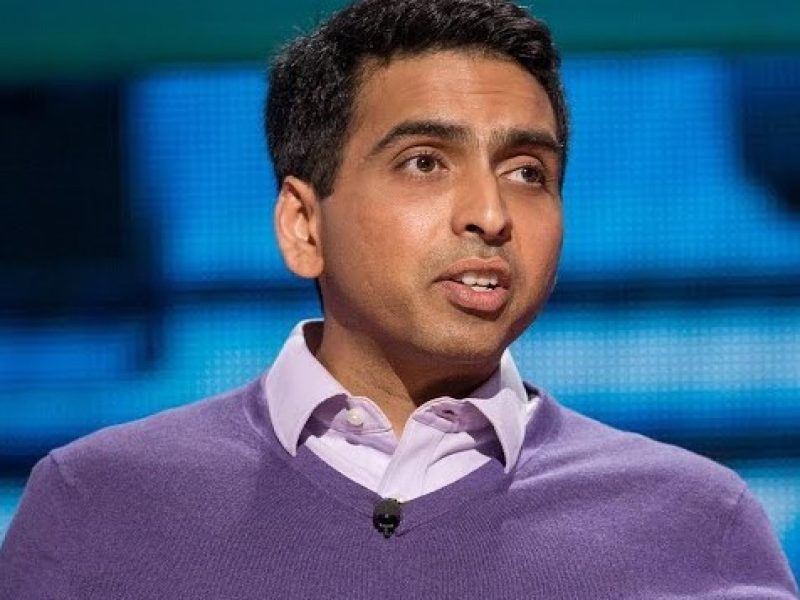

Sal Khan: The Man Who Brought Free Education to Millions
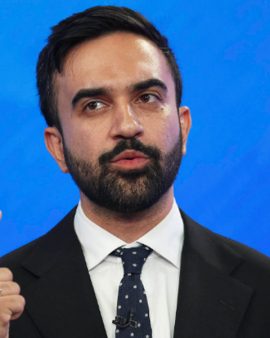
In an age when quality education often comes with a high price tag, one man transformed learning into a free and accessible resource for people around the world. That man is Sal Khan, the founder of Khan Academy, one of the world's most influential online learning platforms. His remarkable journey from a tutor helping a family member to an education innovator impacting millions is a story of vision, dedication, and social impact.
Salman Amin Khan, popularly known as Sal Khan, was born on October 11, 1976, in Metairie, Louisiana, in the United States. Raised in a family that valued education, he displayed a strong aptitude for mathematics and science from an early age. He pursued higher studies at the Massachusetts Institute of Technology (MIT), where he earned degrees in mathematics, electrical engineering, and computer science. Later, he completed an MBA from Harvard Business School, one of the world's leading business institutions.
After graduating, Khan worked in the fields of finance and technology. However, his life took an unexpected turn in 2004 when he began tutoring his cousin, Nadia, who was struggling with mathematics. Since she lived in another city, Khan used the internet to teach her remotely. To make learning easier, he started recording short instructional videos and uploading them to YouTube. These videos explained complex mathematical concepts in a simple and friendly manner.
What began as a small effort to help one student soon attracted a global audience. Students, parents, and teachers from around the world started watching Khan’s videos and appreciating his clear teaching style. Encouraged by the overwhelming response, Khan decided to leave his successful career and focus entirely on creating educational content.
In 2008, he founded Khan Academy, a non-profit educational organization with a mission to provide a free, world-class education for anyone, anywhere. The platform gradually expanded beyond mathematics to include subjects such as science, economics, history, computing, and test preparation. Interactive exercises, personalized learning dashboards, and instructional videos made learning engaging and accessible to students of all ages.
One of Khan Academy’s greatest strengths is its commitment to educational equality. Students from remote villages, developing countries, and underserved communities can access the same high-quality resources as those in the world’s best schools. The platform proved especially valuable during the COVID-19 pandemic, when millions of learners relied on online education to continue their studies.
Sal Khan’s innovative contributions have earned him numerous awards and recognition. His work has been praised by educators, policymakers, and global leaders for transforming how education is delivered and consumed. In 2012, he published The One World Schoolhouse, a book outlining his vision for the future of education and personalized learning.
Beyond technology and innovation, Khan remains deeply committed to the belief that every individual deserves the opportunity to learn and grow. His work demonstrates how a simple act of helping a family member can evolve into a movement that changes millions of lives.
Today, Sal Khan stands as a symbol of educational empowerment. Through Khan Academy, he has shown that knowledge knows no boundaries and that technology can be a powerful force for making education more inclusive, equitable, and accessible to all.