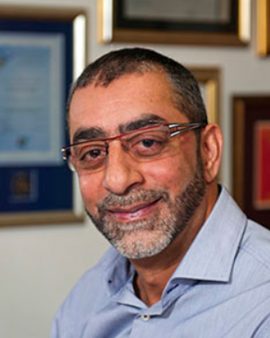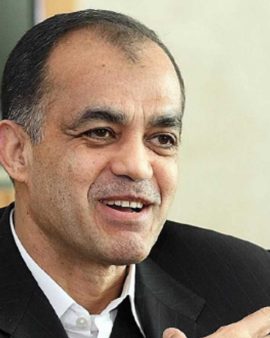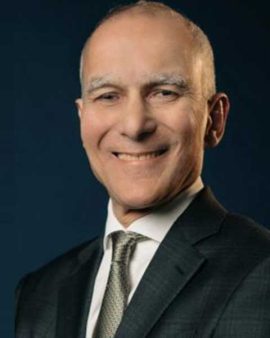


Dr. Moungi G. Bawendi: Pioneering the Nanoworld Through Quantum Dots
Dr. Moungi G. Bawendi is a distinguished scientist whose groundbreaking work in nanotechnology has transformed modern materials science and earned him the Nobel Prize in Chemistry in 2023. Renowned for his pioneering research on quantum dots—tiny semiconductor particles measured in billionths of a meter—Bawendi has significantly advanced the fields of chemistry, physics, medicine, and electronics.
Born on March 15, 1961, in Paris, France, to Tunisian parents, Moungi Bawendi spent parts of his childhood in France, Tunisia, and the United States. His multicultural upbringing fostered a broad perspective and a deep curiosity about the natural world. He pursued higher education at Harvard University, where he earned a Bachelor of Arts degree in Chemistry in 1982. He later obtained a Ph.D. in Chemistry from the University of Chicago in 1988 under the supervision of renowned chemist Louis E. Brus, one of the pioneers in quantum dot research.
After completing his doctoral studies, Bawendi joined the Massachusetts Institute of Technology (MIT), where he would spend most of his academic career. At MIT, he established himself as a leading researcher in nanoscience and became the Lester Wolfe Professor of Chemistry. His work focused on understanding and controlling the properties of nanocrystals, particularly quantum dots.
Quantum dots are microscopic semiconductor particles whose optical and electronic properties depend on their size. Before Bawendi’s contributions, producing high-quality quantum dots with uniform sizes and predictable properties was a major challenge. In the 1990s, Bawendi developed innovative methods for synthesizing quantum dots with exceptional precision and consistency. These techniques enabled scientists to tailor the dots’ colors and behaviors by controlling their size, opening the door to numerous practical applications.
Today, quantum dots are used in a wide range of technologies, including advanced television and computer displays, solar cells, biomedical imaging, and quantum computing. Their remarkable ability to emit bright, pure colors has revolutionized display technology, while their applications in medicine have improved diagnostic imaging and disease detection. Bawendi’s work transformed quantum dots from a laboratory curiosity into a versatile technology with real-world impact.
In recognition of these achievements, Moungi Bawendi shared the 2023 Nobel Prize in Chemistry with Louis E. Brus and Alexei Ekimov. The Nobel Committee honored them for the discovery and synthesis of quantum dots, describing their work as a breakthrough that brought the nanoworld into practical use for humanity.
Beyond his scientific accomplishments, Bawendi is admired as a dedicated educator and mentor. Throughout his career at MIT, he has trained numerous students and researchers, inspiring future generations of scientists to explore the frontiers of nanotechnology.
Dr. Moungi G. Bawendi’s journey exemplifies the power of curiosity, perseverance, and innovation. His pioneering contributions to quantum dot technology have reshaped modern science and industry, demonstrating how fundamental research can lead to transformative advancements that benefit society worldwide. His legacy continues to inspire scientists striving to unlock the potential of the microscopic world.