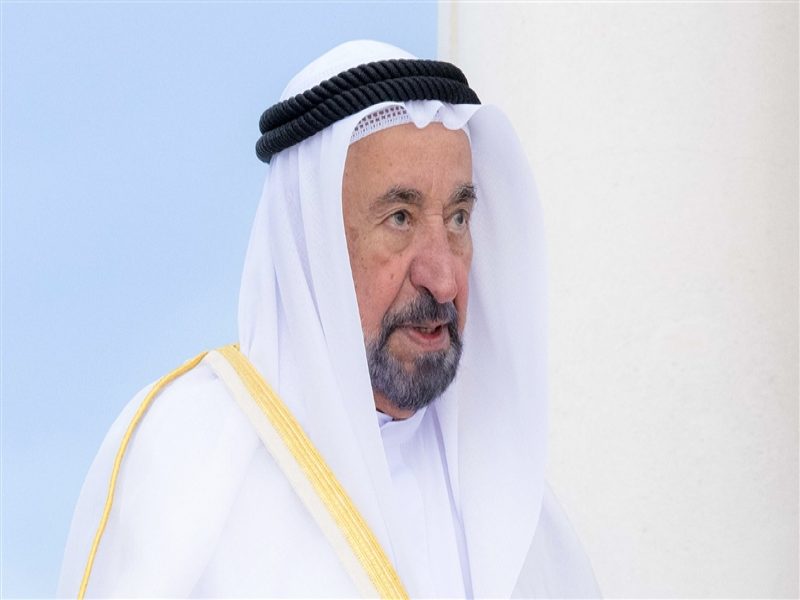
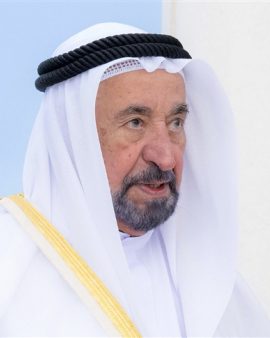
Sheikh Dr. Sultan Al-Qasimi: The Philosopher King of Sharjah Who Built a Legacy on Books, Not Bullets
In an era where global leadership is often measured by military might or economic volume, one ruler took a radically different path. His Highness Sheikh Dr. Sultan bin Muhammad Al-Qasimi, the sovereign of Sharjah, demonstrated that the most enduring weapon a leader can wield is a book. The third-largest emirate in the UAE, once a quiet backwater on the Gulf coast, has been transformed under his 52-year reign into the undisputed cultural capital of the Arab world—a feat recognized officially by UNESCO in 1998 and again in 2019.
Born into the ruling family on July 2, 1939, Sheikh Sultan’s life defies the typical trajectory of a monarch. While many leaders commission historians to write their biographies, he chose to become one. He earned a Bachelor’s degree in Agricultural Engineering from Cairo University in 1971, but his true calling emerged after he assumed the throne in 1972. Remarkably, he pursued a PhD in History at the University of Exeter while simultaneously governing a nation. He later obtained a second doctorate in Political Geography of the Gulf from Durham University. This relentless pursuit of knowledge earned him the title “Sheikh Doctor”—a rare distinction that lends immense academic gravity to his political voice.
His scholarly contribution is monumental. In his seminal 1984 thesis, later published as The Myth of Arab Piracy in the Gulf, he did not simply recite colonial records; he dissected and dismantled them. He argued that the British Empire’s 19th-century label of “piracy” was a colonial excuse to destroy the legitimate maritime trade of local Arab tribes. This work fundamentally altered the historiography of the region, restoring dignity to a narrative long tainted by Western imperialism.
However, Sheikh Sultan is not a man who dwells solely in the past; he builds the future from it. He personally financed and established the University of Sharjah and the American University of Sharjah, insisting that libraries be the architectural centerpieces of every campus. His most visible legacy, the “Sharjah World Book Capital,” sees the emirate hosting a permanent, sprawling book fair that attracts millions. He famously declared, “No nation rises without reading.”
Yet the ruler’s journey has been marked by profound personal tragedy, which he has addressed with rare vulnerability. His son, Sheikh Khalid, struggled with drug addiction—a taboo subject in conservative Gulf societies. Rather than hiding the shame, Sheikh Sultan publicly acknowledged the struggle, channelling his grief into action. He mandated the creation of one of the region’s most advanced addiction rehabilitation centers, transforming private pain into public policy and saving countless families from similar heartbreak.
Today, at 86, Sheikh Dr. Sultan continues to wear two hats: the traditional kandura of a Gulf monarch and the scholarly robes of a university don. He writes history in his personal library by morning and signs decrees by afternoon. He is the philosopher king of the Gulf—proof that a leader who remembers the past can most wisely architect the future.